UAE
UAE Aviation Sector Demonstrates Extraordinary Resilience as Dubai Airports and National Carriers Maintain Near-Full Capacity
Proactive route optimization, advanced air traffic coordination, and steady passenger demand keep the Emirates at the center of global travel connectivity.
By 19Network Editorial Team · Jul 23, 2026 · 5 min read
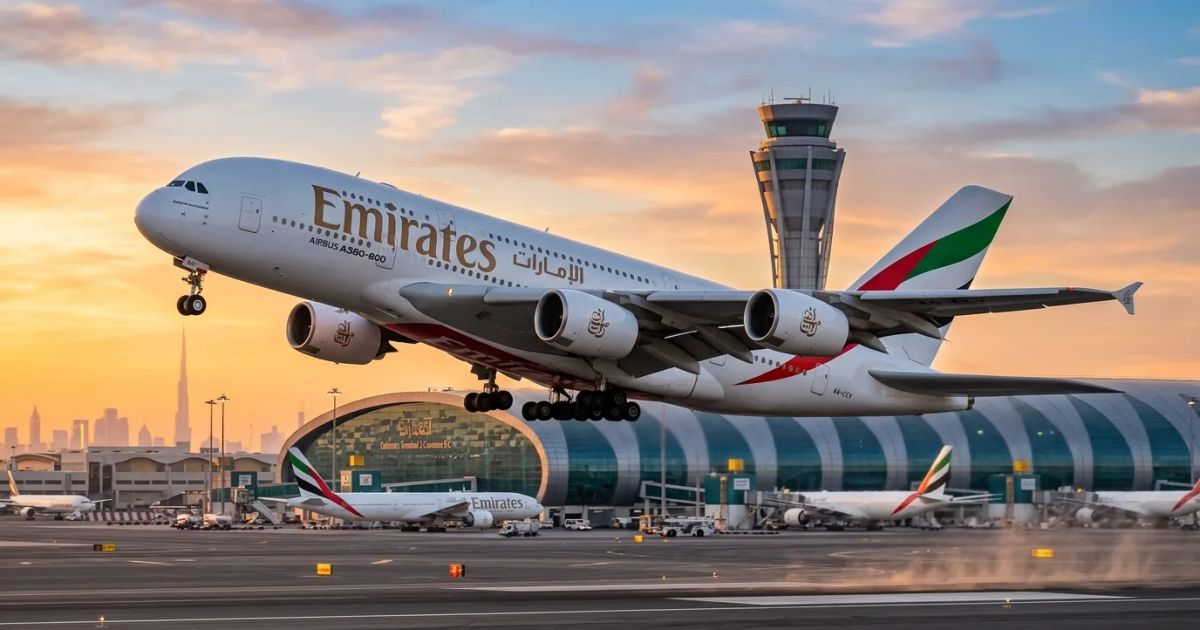
Despite localized airspace adjustments across parts of the broader region, the United Arab Emirates’ aviation ecosystem continues to demonstrate robust operational strength. Leadership at Dubai Airports confirmed that flight movements at Dubai International (DXB) are proceeding smoothly, carrying over 200,000 daily passengers and proving the world-class adaptability of national infrastructure.
The aviation sector of the United Arab Emirates has once again reaffirmed its position as an unshakeable pillar of global connectivity. During a period requiring precision navigation and airspace recalibration across parts of the wider Middle East, the UAE’s world-leading aviation infrastructure has managed flight movements with remarkable efficiency. Speaking on the sidelines of major global aerospace gatherings, senior leadership at Dubai Airports confirmed that Dubai International Airport (DXB) is operating at near-full capacity. With daily passenger throughput regularly crossing the 200,000 threshold during peak summer travel windows, the airport’s operational management team has maintained seamless terminal flows, security processing, and luggage logistics. Approximately 50% of these daily travelers represent connecting passengers, proving that international travelers continue to view the Emirates as their primary, preferred cross-continental gateway. This high level of stability is the direct result of rapid, coordinated action between the General Civil Aviation Authority (GCAA), local airport operators, and national flag carriers including Emirates, Etihad Airways, and flydubai. Rather than canceling services, airlines have strategically adjusted international flight corridors. By utilizing optimized alternative airspace paths, long-haul routes connecting Asia, Europe, and the Americas remain fully operational with minimal delay. Furthermore, state-of-the-art…