UAE · Breaking
UAE airlines extend cancellations as tanker blasts and Riyadh strikes escalate regional risk
By 19Network Editorial Team · Nov 20, 2026 · 2 min read
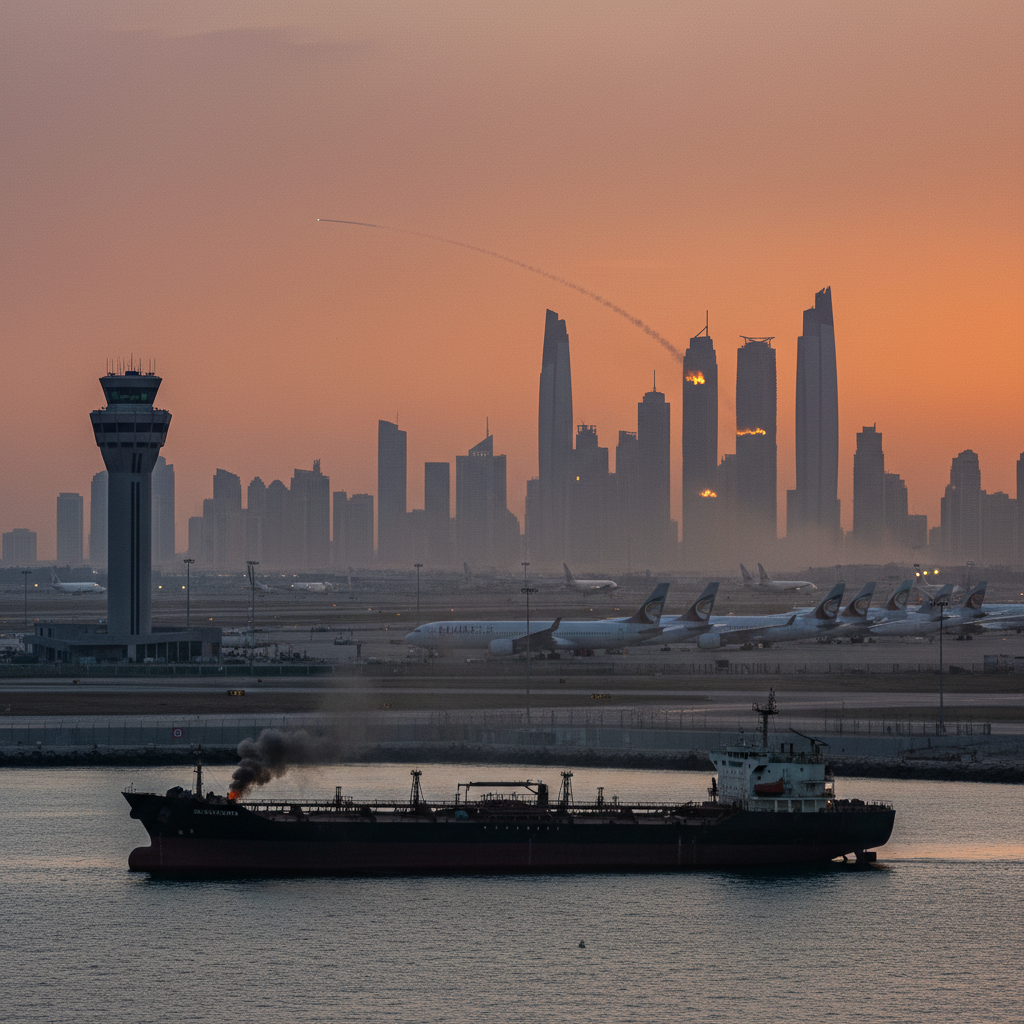
Flights cancelled and shipping risks rise as Iran reports tanker mine strikes and Houthi missiles hit Riyadh's financial district.
The Strait of Hormuz remains closed on Friday, 20 November, as Iran’s military reported that three oil tankers caught fire following naval mine strikes east of the critical waterway. The Joint Maritime Information Center has warned that further attacks on commercial vessels are highly likely, leading to a surge in regional shipping and insurance costs. Missile strikes hit Riyadh In a major escalation of regional hostilities, a Houthi missile attack on Riyadh damaged the PIF Tower, the headquarters of Saudi Arabia’s sovereign wealth fund and the tallest building in the kingdom. While Saudi Civil Defence reported no injuries, the strike impacted several buildings within the King Abdullah Financial District. The Saudi-led coalition confirmed it intercepted additional ballistic missiles and drones launched toward the capital and southern regions early on Friday, 20 November. The UAE has officially condemned the strikes as a violation of Saudi sovereignty. In response, Saudi Arabia warned it reserves the right to take "all necessary measures" to protect national assets and urged the UN Security Council to intervene. US naval shifts and war costs The USS Theodore Roosevelt arrived in the Middle East on Friday, 20 November, maintaining a three-carrier strike group presence in the region as the USS George Washington departed for Japan. This military rotation comes as the Pentagon confirmed the conflict has cost $48.3 billion as of 13 November, exceeding initial budget estimates by…
Source: Gulf News