Finance
Energy and Grid Gaps Threaten Middle East’s Trillion-Dollar AI Boom
By 19Network Editorial Team · Oct 15, 2026 · 2 min read
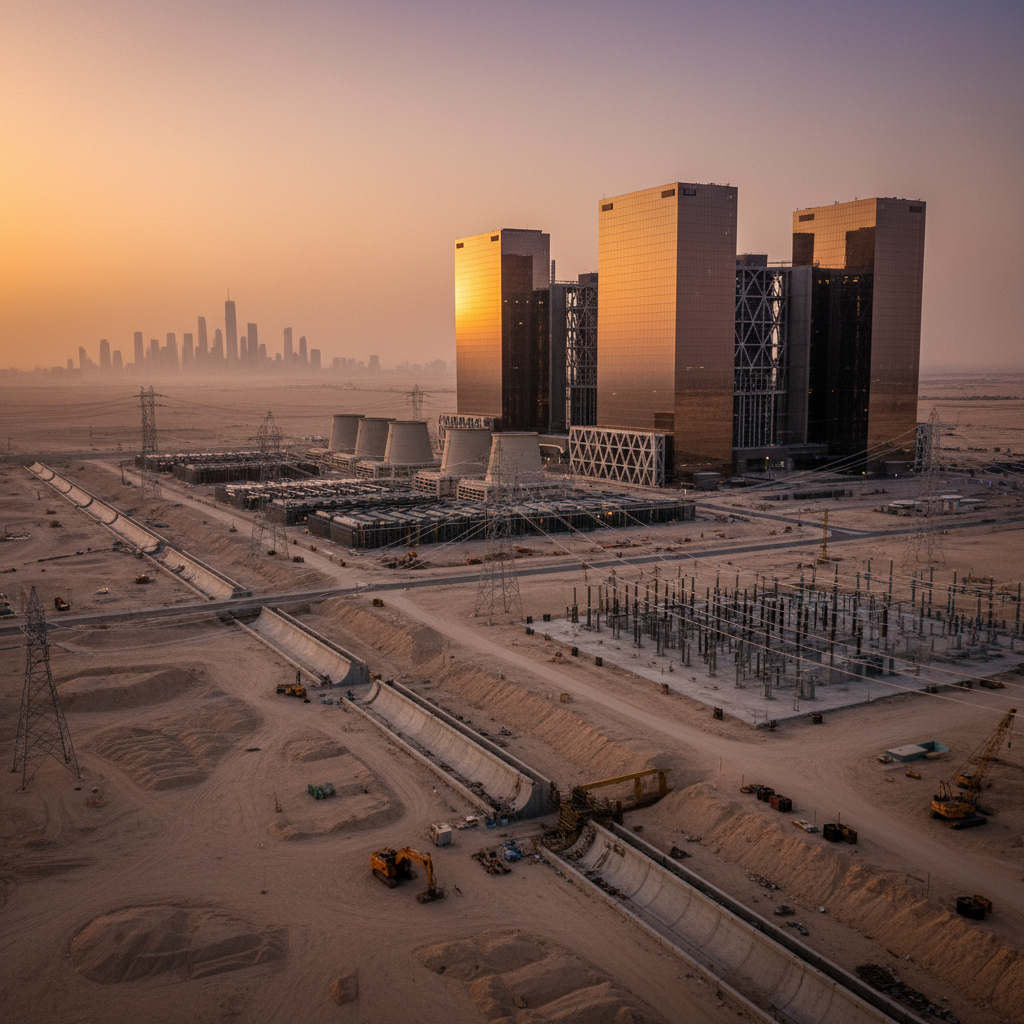
New WEF data shows AI implementation could add $1 trillion to regional economies by 2030 if power and water infrastructure gaps are closed.
Artificial intelligence (AI) is projected to generate more than $1 trillion in economic and sustainability value across the Middle East and North Africa (MENA) by 2030, according to data released by the World Economic Forum (WEF) on Thursday, 15 October. Two new reports, \"Unlocking Value: AI for Resilient Growth in MENA\" and \"Optimizing Hyperscale Data Centre Infrastructure in MENA,\" reveal that while the region possesses the capital to lead in AI, success depends on massive upgrades to digital systems and utility grids. The research, developed with Bain & Company and the Saudi Research and Media Group (SRMG), identifies significant hurdles in energy and water management required to sustain large-scale data centres. Direct Economic Projections The WEF report breaks down the $1 trillion valuation into sector-specific targets. The public sector is expected to enable $370 billion in sustainable investment flows, while the financial sector could unlock $200 billion in sustainable financing. Furthermore, AI application is forecasted to prevent $250 billion in long-term asset losses and add $90 billion in valuation to the energy sector through improved sustainability performance. Cross-sector partnerships are anticipated to launch $100 billion in new sustainable projects. Maroun Kairouz, Managing Director at the World Economic Forum, stated that while MENA has the resources and ambition to become a global hub, the transition requires immediate innovation in…
Source: WAM (Emirates News Agency)