AI & Technology
Synthetic DNA Integrated into Semiconductor Chips to Deliver 100x Lower-Power AI Memory Architecture
In a breakthrough published in Advanced Functional Materials, Penn State engineers merge synthetic DNA with crystalline perovskite to build bio-hybrid memristors that process and store data in the same location.
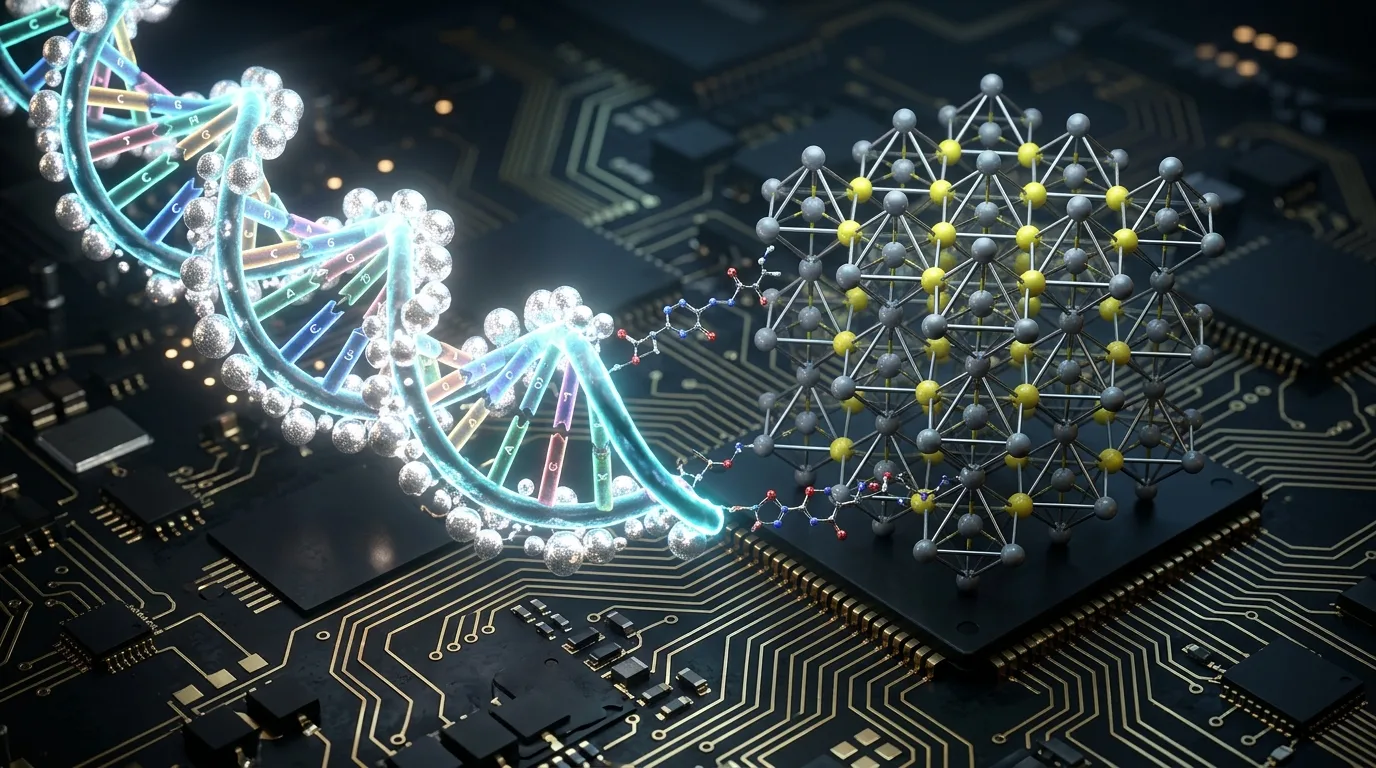
Engineers develop a bio-hybrid memristor combining synthetic DNA with perovskite semiconductors, slashing AI memory power consumption by up to 100 times.
Materials scientists and computational engineers have taken a historic step toward resolving the escalating energy crisis in artificial intelligence by successfully merging biological molecules with solid-state electronics. In a study published in the peer-reviewed journal Advanced Functional Materials , a research team led by Pennsylvania State University revealed that combining synthetic DNA with crystalline perovskite semiconductors creates a bio-hybrid memory architecture that consumes up to 100 times less power than standard silicon storage devices. The technological milestone addresses the primary limitation facing modern computing: the memory bottleneck in artificial intelligence hardware. As large-scale frontier AI models scale toward trillion-parameter architectures, standard computer chips face severe thermodynamic and electrical constraints. Traditional silicon architectures are built on the Von Neumann model, where computational processing (CPU/GPU) and memory storage (DRAM/NAND) are physically separated. Shuttling continuous streams of data back and forth across interconnects generates immense waste heat, consumes gigawatts of electricity, and throttles real-time…