World
Mount Etna Eruption Spews Towering Volcanic Ash Cloud, Shutting Sicily's Busiest International Airport
Continuing eruptive activity from Europe's most active stratovolcano triggers red aviation alerts, runway blanketings, and extensive flight cancellations during peak summer tourism.
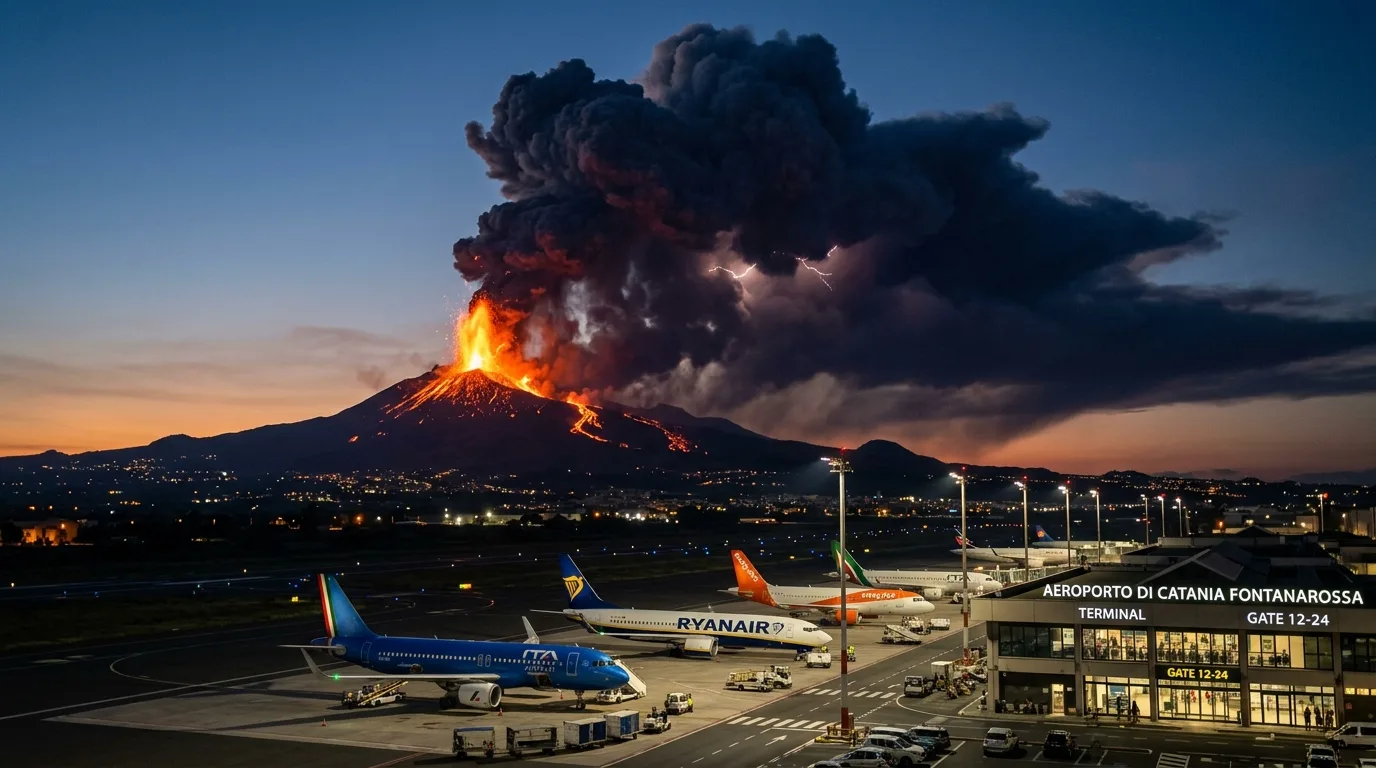
Mount Etna erupts violently in Sicily, grounding flights at Catania Airport and causing the greatest regional travel disruption in over two decades.
Europe’s most active stratovolcano, Mount Etna, has entered an intense and prolonged eruptive phase, hurling towering columns of volcanic ash, incandescent pyroclasts, and lava streams across the eastern Sicilian landscape. The sustained release of dense volcanic particulate into the surrounding troposphere forced aviation authorities to order the complete shutdown of Vincenzo Bellini Catania Airport, triggering what civil aviation officials describe as the most severe flight disruption experienced in eastern Sicily in more than twenty years. Located approximately 30 kilometers north of the major port city of Catania, the 3,357-meter-high volcano experienced a surge in volcanic tremors originating from its Voragine and South-East summit craters. According to technical monitoring bulletins published by Italy’s National Institute of Geophysics and Volcanology (INGV), the eruption produced explosive strombolian activity and tall lava fountains reaching hundreds of meters above the crater rim. Prevailing southern wind currents rapidly pushed dense, abrasive ash clouds directly over the Gulf of Catania, reducing flight visibility to near-zero levels and depositing thick layers of fine…