UAE
Safety as the Ultimate Standard: Emirates and Etihad Extend Flight Suspensions Amid Ongoing Regional Standoff
As geopolitical friction continues near critical maritime and airspace corridors, the UAE’s flagship carriers demonstrate unwavering commitment to passenger security by extending strategic flight cancellations to select destinations.
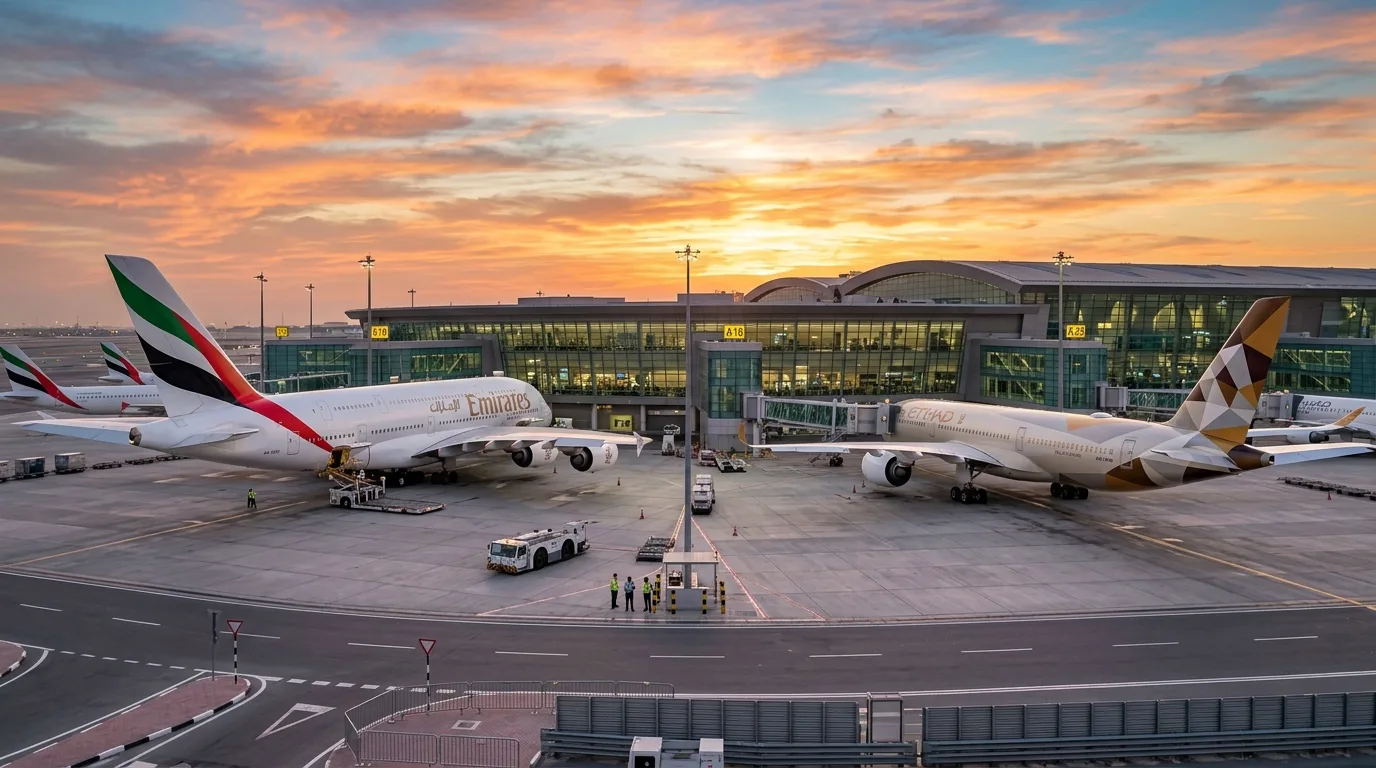
The United Arab Emirates’ aviation sector continues to lead the global industry in proactive risk management. Citing an absolute commitment to operational safety amid ongoing regional geopolitical tensions, major national carriers Emirates and Etihad Airways have formally extended their flight suspensions to several regional destinations, ensuring that passenger security remains the paramount priority.
The aviation industry requires a delicate balance of global connectivity and uncompromising safety. In the United Arab Emirates, the latter always dictates operational reality. As complex geopolitical dynamics and maritime standoffs continue to unfold near the Strait of Hormuz and surrounding territories, the UAE’s premier national carriers—Emirates and Etihad Airways—have announced the strategic extension of flight suspensions to select regional destinations. This decision underscores a fundamental pillar of the UAE’s transport philosophy: the absolute security of every passenger, crew member, and aircraft. According to synchronized corporate advisories issued by both airlines, scheduled passenger and cargo services to specific regional airports, notably including destinations in Bahrain and Kuwait, will remain suspended into a third consecutive week. The prolonged cancellations are a direct response to fluctuating airspace restrictions and elevated military presence in adjacent flight information regions. By choosing to bypass these zones entirely, UAE carriers are eliminating potential exposure to uncoordinated air traffic or sudden airspace closures that often accompany…